
Summer Design Sprint 2026
Bringing developmental science into educators’ work


In July 2026, USC CANDLE convened 33 teams from schools and educational organizations across 17 states and Switzerland to examine how developmental science could inform the learning experiences they create for adolescents. The cohort included schools that look almost nothing alike on paper: public and private, charter and alternative, urban and rural, each answering to different communities, with access to different resources, and with different definitions of success. Educators brought questions rooted in those settings and considerable knowledge of the young people they serve.
The Summer Design Sprint is part of CANDLE’s Innovation Lab. Through COLABs—collaborative learning and action-based communities—educators and researchers study adolescent development together and explore its implications for practice. This work reflects a larger commitment at CANDLE: to place human development at the center of educational design. The hope is that school helps young people understand themselves and their responsibilities to others, find purpose in their learning, and imagine a future they can help shape. The Design Sprint offered educators time to consider what that commitment asks of their teaching.
Student Perspectives in the Design Process
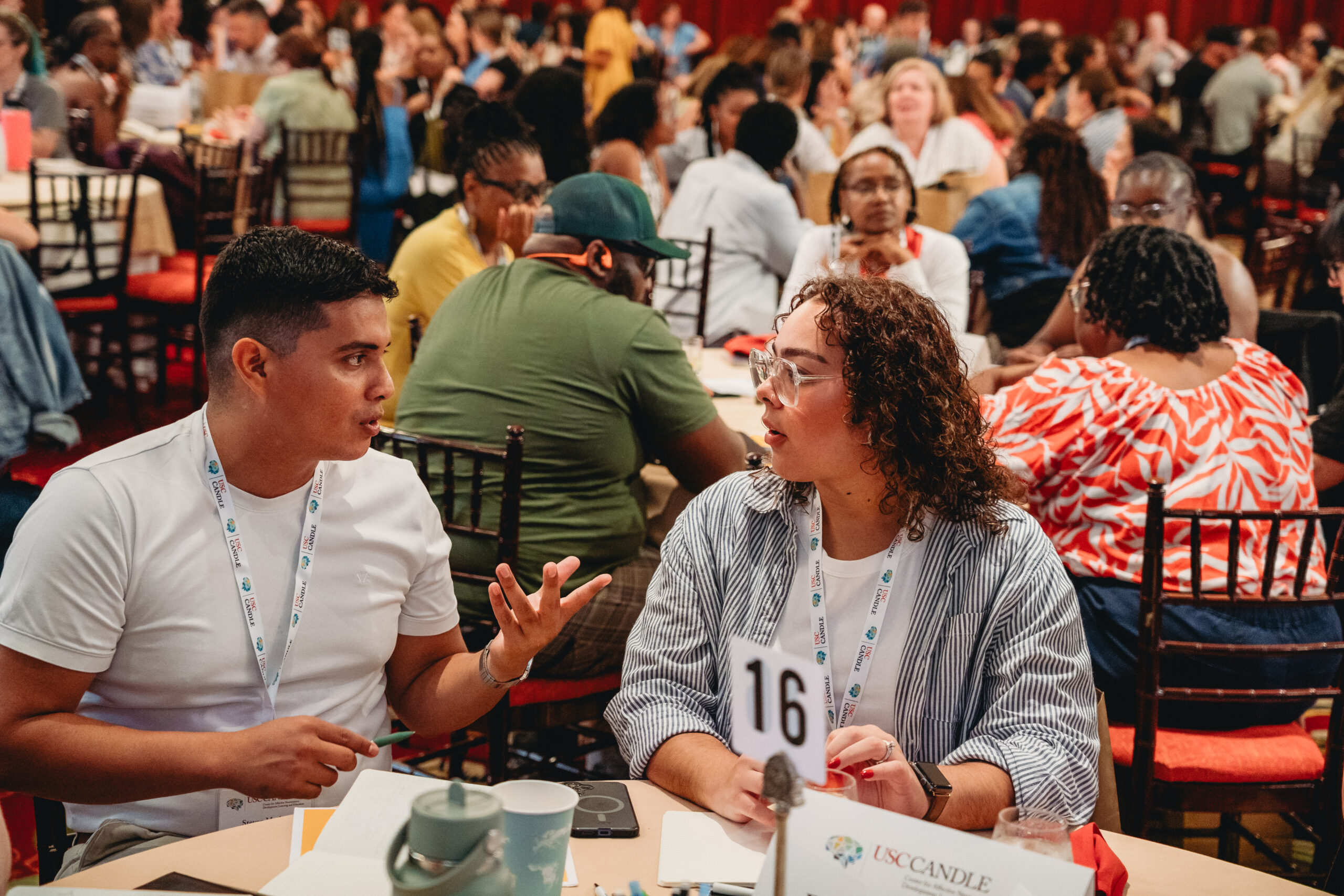
Including young people was one of the most deliberate design choices. CANDLE wanted students at the Design Sprint as a real check on adult design, not as a token presence. A cohort of junior interns served as student advisors throughout the event. They reviewed proposed designs and talked with educators about how they learn and how they build relationships with teachers. Mia M., an incoming senior and CANDLE junior intern, described educators seeking students’ feedback while their plans were still taking shape. Students’ perspectives should influence what happens next.

From Science to Classroom Practice
Participants engaged closely with research on Transcendent Thinking: how adolescents move beyond the immediate experience to consider broader meanings, values, and possible futures. They questioned the ideas and discussed them with colleagues. As the week progressed, those conversations began to inform decisions about curriculum and instruction.
Kelly Marie Shepherd, science lead at Betty Shabazz International Charter Schools in Chicago, described a project on water. Studying the Flint water crisis would give students a way to consider what water means to people’s lives and investigate it scientifically. She hoped that inquiry could lead students toward advocacy, volunteering, or other ways of engaging with water issues beyond school.
For a team of theater educators from Salt Lake City, the connection between emotion and academic learning began with inviting students to enter a character’s world through their own experiences. The teachers planned to have students use those experiences to connect with a character’s motivations, choices, and perspective to deepen their interpretations of the play. They emphasized keeping standards high while providing students with the support they need to achieve them. Their approach showed how personal meaning and academic rigor can reinforce one another: when students find meaning in a character’s story, they have a foundation for more thoughtful analysis and stronger academic work.


Resources from the Design Sprint
Metabolizing Developmental Science
Experienced COLAB alumni also shared what they had learned from applying developmental science and revising their teaching. During one interactive Design Sprint session, a COLAB alum described a year of experimentation, including ideas that had not worked as expected. The educator drew on those experiences to help Design Sprint participants make sense of the science in their content area, sharing what it looked like to apply the research and adjust along the way.
These accounts illustrate how educators metabolize developmental science, taking it in and making it part of how they think and teach. Understanding a concept is only a beginning. Putting it to work takes interpretation, chances to try something with real students, and colleagues to make sense of what happens, including when it doesn’t go as planned.
The Design Sprint brought educators into conversation with researchers and colleagues whose experiences challenged or extended their own. It also gave CANDLE questions to carry forward.
What support helps an initial design become part of an educator’s practice?
What do students’ responses reveal about how they learn and develop?
Where might these observations open new questions about how emotions, relationships, and learning interact?


The work continues in classrooms and through the COLAB community, building on what educators began at the Design Sprint. The goal is for schools to be places where adolescents are trusted to think deeply about their lives and the world, and where they leave believing they have something to offer. Every design that emerged from the Design Sprint is a bet that young people are ready for that. The students in the room made it clear that they are.
Continue Exploring
Learn about professional learning and collaboration opportunities with USC CANDLE.